Wooden panic exit doors
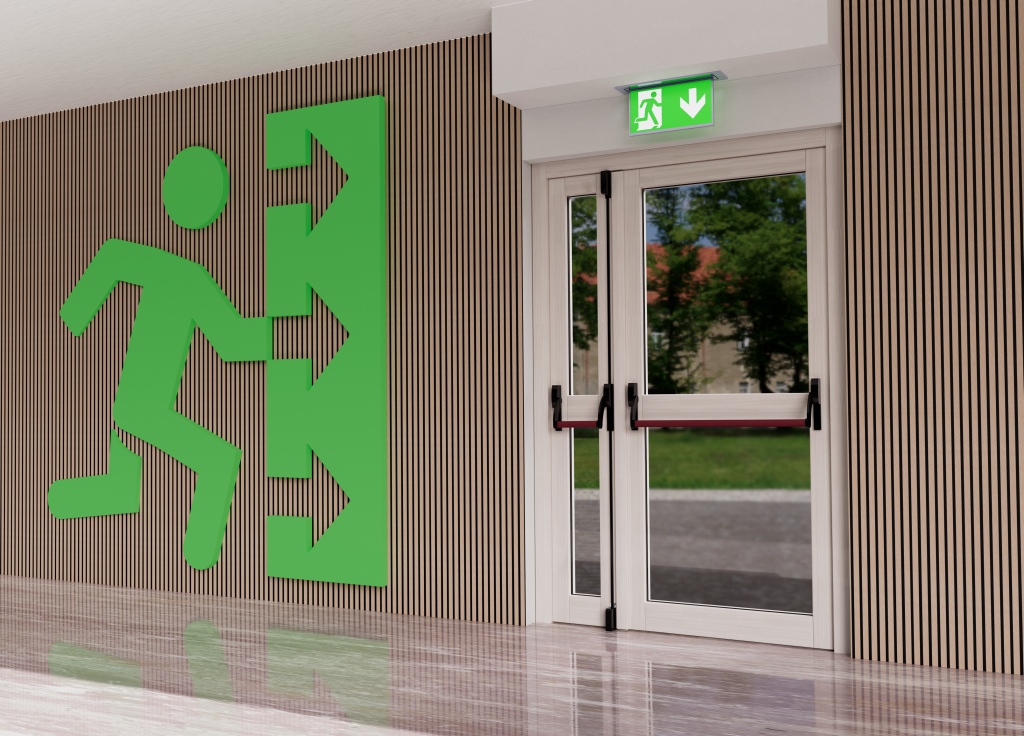
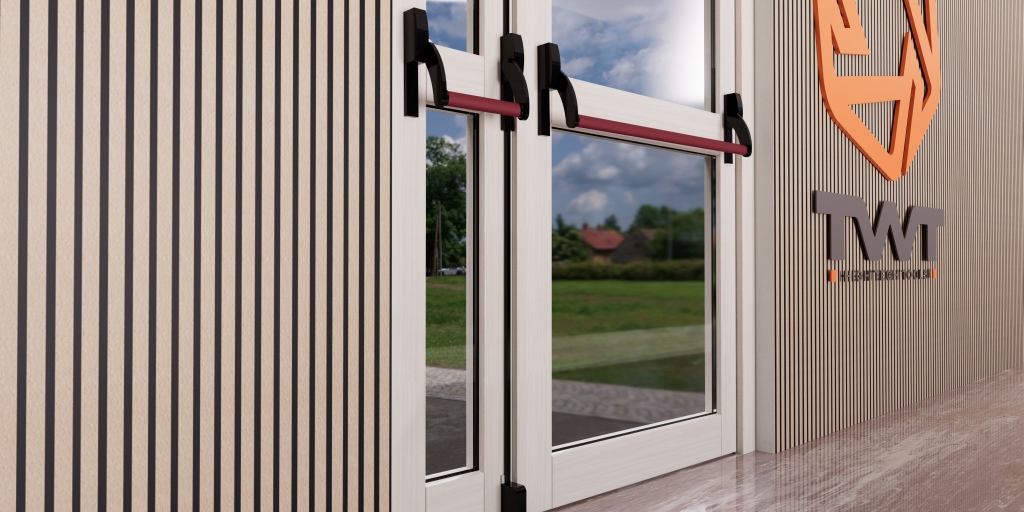
When a door forms part of an escape route, safety comes first. But this does not mean having to compromise on the window and door’s performance or the aesthetic quality of the wood.
TWT has developed a range of wooden panic exit doors designed to meet requirements that, until now, were not always addressed by a single product: safety for escape routes, air, water and wind tightness, and the aesthetic appeal of wooden windows and doors.
A practical solution for window and door manufacturers wishing to tackle this type of project with a comprehensively designed system, compatible components and dedicated technical support.
The demand for panic exit doors is increasingly prevalent in buildings open to the public, commercial premises and spaces where a safe escape route must be guaranteed.
In the wood sector, however, the availability of solutions capable of combining anti-panic functionality with verified air, water and wind tightness performance has long been limited.
The reason highlighted in the TWT project is clear: for doors along escape routes, the relevant regulations do not require performance tests relating to these aspects.
TWT has therefore chosen to go beyond the minimum requirement and develop a solution capable of offering window and door manufacturers something extra.
The TWT project dedicated to wooden panic exit doors was created to integrate three fundamental elements.

The door is designed for use along escape routes and incorporates panic exit devices compliant with standard EN 1125.
It is therefore not simply a matter of adding a panic bar to a traditional door, but of developing a system in which the various components must be considered and tested as a whole.
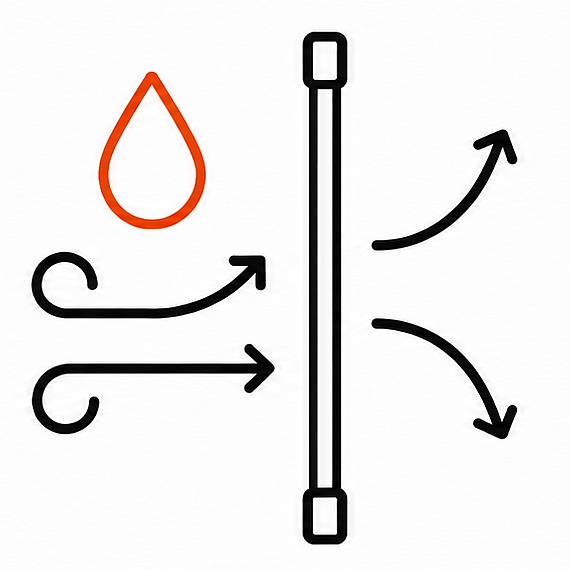
Panic safety is complemented by proven and measured sealing performance.
Tests carried out at the Istituto Giordano, a notified body, have awarded the W0 model wood-based panic exit door the following classifications:
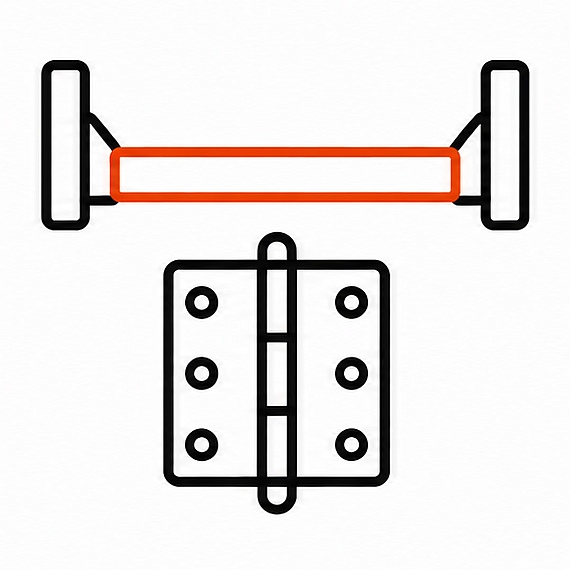
Fittings, hinges and anti-panic devices are selected to ensure they are compatible with one another.
For manufacturers of windows and doors, this means avoiding the need to identify and combine all the necessary components individually, one by one.
TWT provides a system designed to simplify the design process and streamline order management.
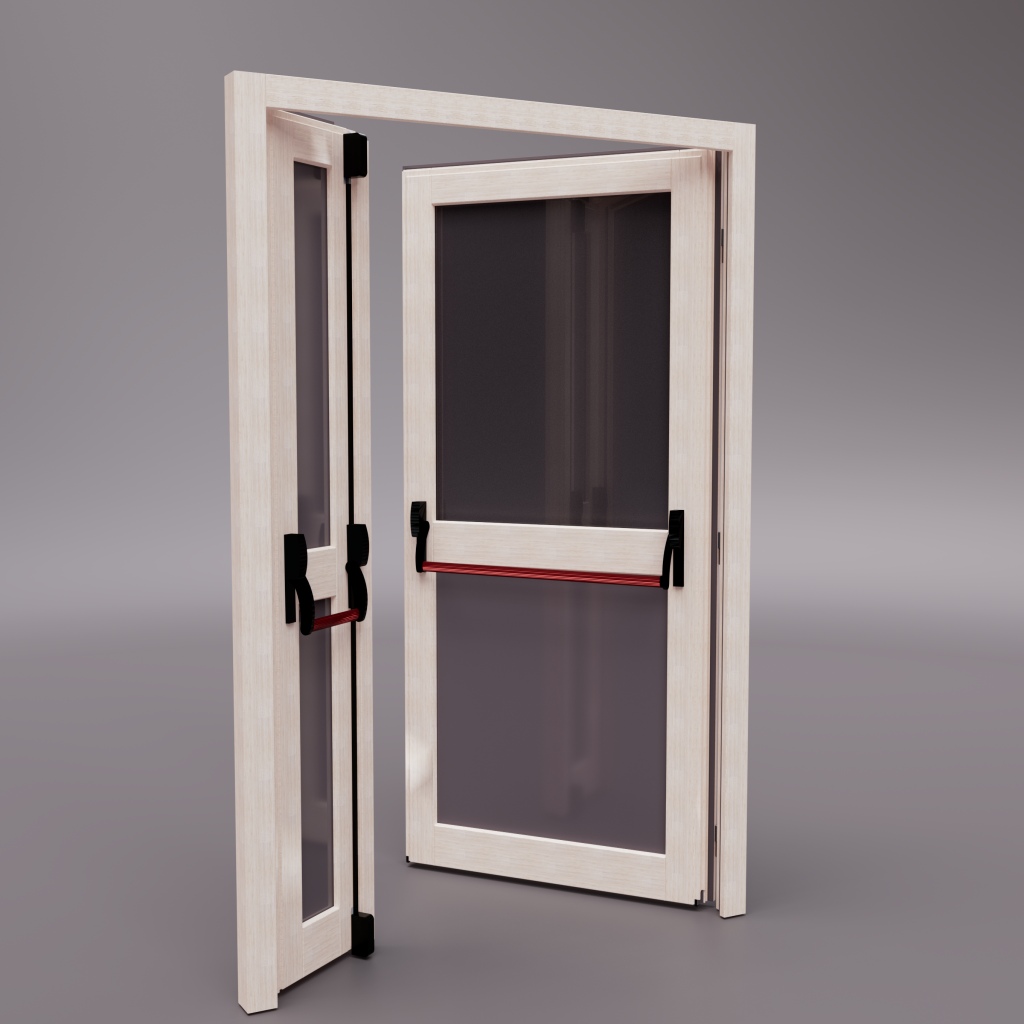
Every manufacturer has different requirements in terms of machining operations, aesthetics, lead times and costs.
For this reason, the system can be configured in two different ways for fitting the panic hardware: surface-mounted or mortise-mounted.
In the surface-mounted version, the panic bar and locking components, such as vertical rods and latches, are fitted to the surface of the door and protected by metal covers.
The components therefore remain visible.
This solution is designed for those seeking, above all:
In the mortise-mounted configuration, on the other hand, only the handle remains visible.
The lock and vertical rods are housed inside the side frames, in recesses specifically cut out during the machining operations for windows and doors.
The result is a cleaner aesthetic, which is particularly appealing when the front door needs to fit into projects where the visual appeal of the wood plays an important role.
However, this solution requires more meticulous design and precise milling, as the hardware components must be integrated directly into the structure.
It is one of the most important aspects of the entire project.
When a door is incorporated into an evacuation plan, it is not enough to take a pre-designed window and door and subsequently add a panic exit device.
The frame, door leaf, hinges, lock and panic bar constitute a single system, which must be assessed and certified as a whole under the supervision of a Notified Body.
Products intended for these applications fall under System 1 for the assessment and verification of constancy of performance (VVCP).
The requirements specified in the design include:
Precisely because a panic-exit project requires expertise that goes beyond mere woodworking, TWT has chosen to support the manufacturer with the technical and documentation aspects as well.
An agreement has in fact been put in place with a specialist consultancy firm, which can guide clients through the process required to achieve CE marking under System 1.
TWT’s support includes:
For TWT, offering a solution means not just supplying the system, but enabling the window and door manufacturer to tackle the project with greater confidence and assurance.
Incorporating wood panic exit doors into your product range means being able to fulfil specific orders where the safety of escape routes must be balanced with precise architectural and performance requirements.
With the system developed by TWT, you can offer a solution that combines:
Cutting technologies / Cutter systems
Window systems
Resources
Who we are
Cutting technologies / Cutter systems
Window systems
Vat nr: 02434730228
This site uses technical and profiling cookies.
You can accept, reject, or customize the cookies by clicking the desired buttons.
By closing this notice, you will continue without accepting.
By accepting, you acknowledge that your personal data may be collected for the purpose of personalizing and measuring the effectiveness of advertising.
Privacy Settings
This website uses cookies to improve your experience while you navigate through the website.
View the Cookie Policy View the Personal Data Policy
Google Analytics is a web analytics service provided by Google Ireland Limited ("Google"). Google uses the collected personal data to track and examine the usage of this website, compile reports on its activities, and share them with other Google services. Google may use your personal data to contextualize and personalize the ads of its advertising network. This integration of Google Analytics anonymizes your IP address. The data sent is collected for the purposes of personalizing the experience and statistical tracking. You can find more information on the "More information on Google's handling of personal information" page.
Place of processing: Ireland - Privacy Policy
Additional consents:
Google Fonts is a service used to display font styles operated by Google Ireland Limited and serves to integrate such content into its pages.
Place of processing: Ireland - Privacy Policy
Google Maps is a maps visualization service provided by Google Ireland Limited. This service is used to incorporate content of this kind on its pages.
Place of processing: Ireland - Privacy Policy